



21 Jan How Melodie combines sound-based AI search and contextual metadata to spotlight original Australian artists
Melodie is a music licensing platform that provides pre-cleared music for film, TV, advertising, and content creation. All artists and tracks on the platform are carefully curated and hand-selected for quality, originality, and emotional resonance. Ethics are at the core of Melodie’s company philosophy. It operates under a 50/50 revenue and royalty split, meaning Melodie doesn’t earn money on downloads until the artist does.
To make it easier to discover music and artists at scale, Melodie continues to refine how users navigate its catalog. AI helps users explore more quickly—but it doesn’t replace the human element behind editorial curation.
The rising tension between depth and speed
As Melodie’s catalog grew, a familiar tradeoff emerged: depth versus speed.
Despite thoughtful editorial tagging, the reality was that users often struggled to translate nuanced creative briefs into static keywords. “Describing music is inherently subjective; what sounds ‘uplifting’ to one person might sound ‘intense’ to another. As the saying goes, talking about music is like dancing about architecture,” explains Evan.
By relying solely on tags, users often found themselves in an experimental searching-listening-refining-repeating loop—a time-consuming effort that most editors and producers simply don’t have the bandwidth for.
Melodie recognized this problem early on and set out to improve the user experience in their library. As Evan puts it, “bridging the gap between ‘hearing it in your head’ and ‘finding it on the screen’ is the holy grail of music licensing.”
AI as an enabler, not a generator
Human curation is central to how Melodie operates. Tracks are not scraped or auto-generated. Over time, it became clear that tags on their own couldn’t support the kind of discovery users needed, so AI was added to help surface music intuitively and improve navigation.
Cyanite aligned naturally with that philosophy.
Rather than positioning AI as a substitute for curation, Cyanite’s AI search treats sound as data that can be understood, compared, and explored. What clicked for Melodie in their search for AI music analysis software was Cyanite’s approach: “The technology felt musical rather than just mathematical. The analysis is intuitive and forgiving, respecting the nuances of the tracks,” says Evan.
Thanks to this shared understanding, Cyanite became part of Melodie’s day-to-day music discovery process.
Cyanite aligns with our philosophy because it doesn’t use AI to generate content; it uses AI to uncover it. It solves a genuine pain point for our users: the time-consuming nature of music search. We immediately saw that Cyanite could amplify our existing search system rather than overwrite it. It wasn’t a case of ‘AI versus humans’; it was AI empowering humans to find better music, faster.
- Evan Buist, Managing Director, Melodie Music
How Cyanite fits into Melodie’s workflow
Today, Melodie users move fluidly between different music discovery pathways depending on their working process.
Sound-based Similarity Search
Users can use Cyanite’s Similarity Search to analyze a reference song and instantly explore tracks with a comparable emotional arc, energy, and sonic character. The reference can come from Spotify, YouTube, or a temporary edit.
This closes the gap between intuition and results in seconds.

Prompt-based Free Text Search
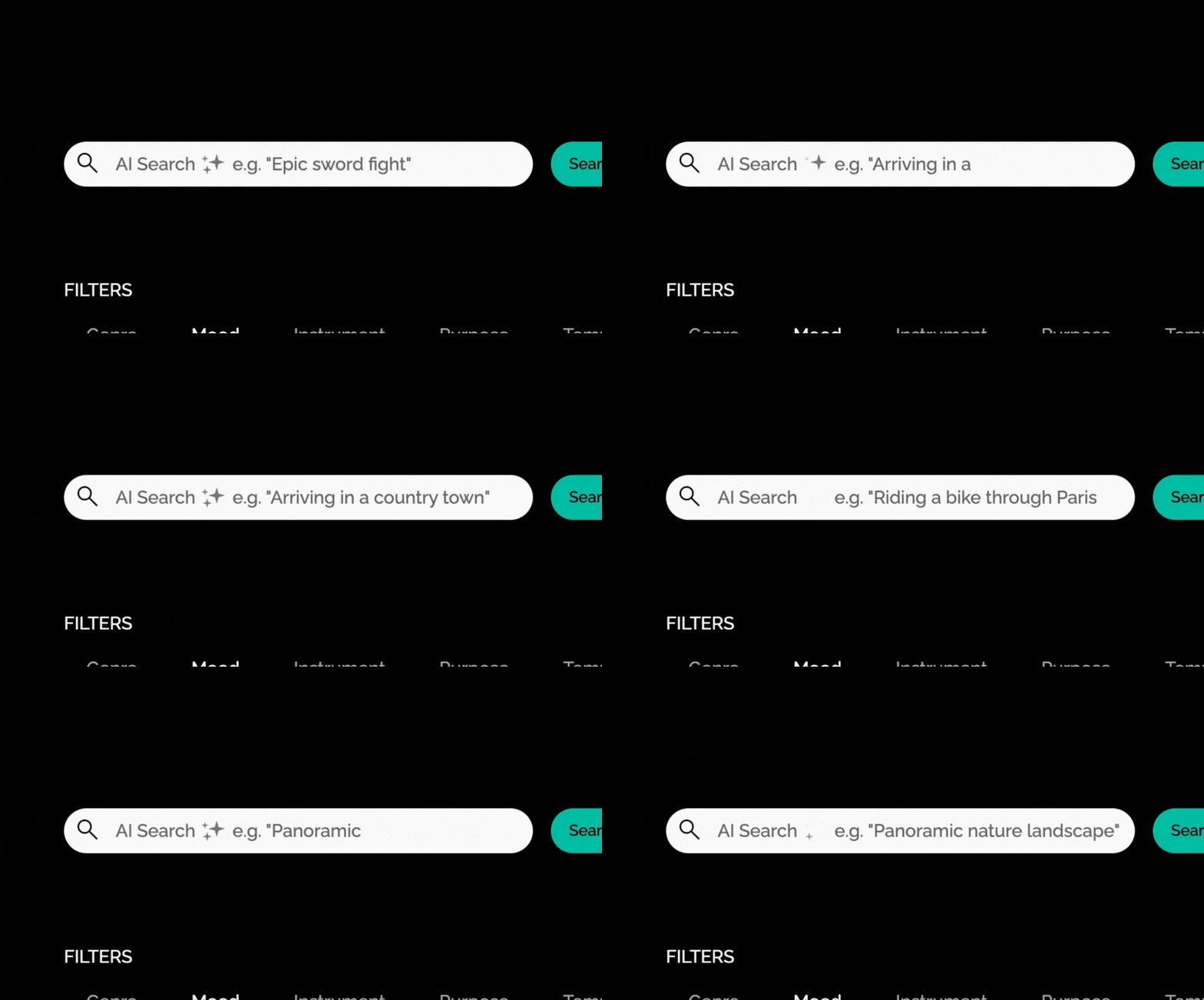
Some users prefer to express what they are looking for in their own words. Prompt-based search allows them to describe mood, pacing, or instrumentation, even with spelling errors or mixed languages. Evan believes natural language search has done for music libraries what Google did for information in the late 90s: democratized access.
Regardless of how a user describes music, AI provides a laser-accurate shortlist in seconds. It turns discovery into exploration, allowing users to combine the speed of AI with Melodie’s human-tagged editorial filters to find the perfect track.
- Evan Buist, Managing Director, Melodie Music
Editorial filters and contextual metadata
Even though AI excels at recognizing patterns in sound, only people can understand context, intent, and cultural meaning. That’s where editorial curation shines, as it carries the cultural, social, and creative nuances that AI can’t infer on its own. Melodie’s is valued for its trust and consistent quality, so they couldn’t rely exclusively on AI. Especially since, as Evan puts it, their users trust their taste, ethics, and artists.
To harmonize AI and editorial nuances, users combine Cyanite’s sound- or prompt-based results with Melodie’s tagging system, which brings in the contextual metadata layer AI can’t deliver.
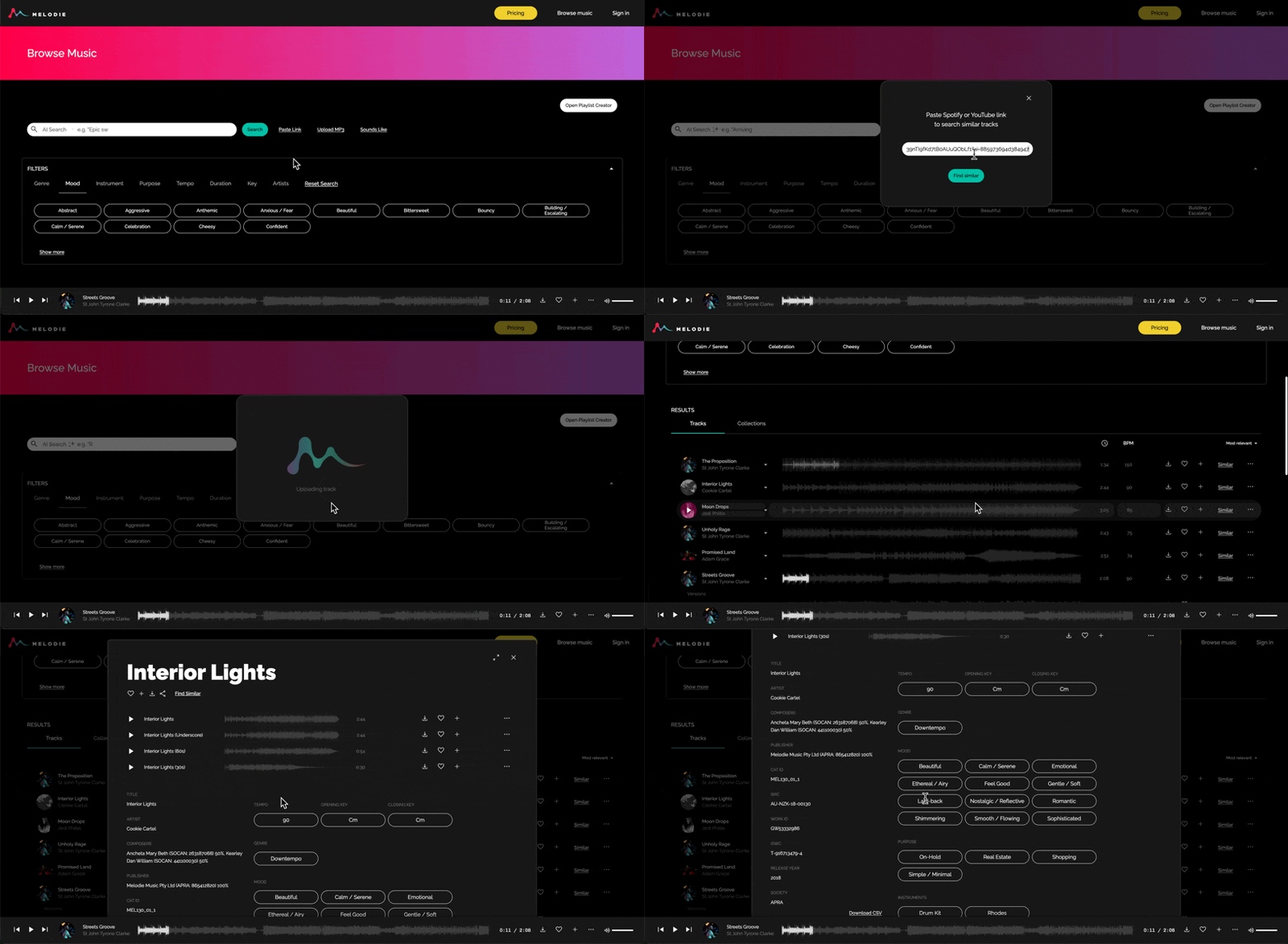
This hybrid approach means discovery can become exploration: fast, confident, and grounded in human context. “Cyanite helps users get to the right neighborhood quickly, but our human-tagged keyword taxonomy ensures the house is built correctly. By combining the two, we ensure that efficiency never comes at the cost of the ‘soul’ of the library,” explains Evan.
Spotlighting original Australian music through contextual metadata
One of Melodie’s most impactful filters is the “Australian Artists” tag. As a proudly Australian brand, spotlighting local artists is a core value for Melodie.
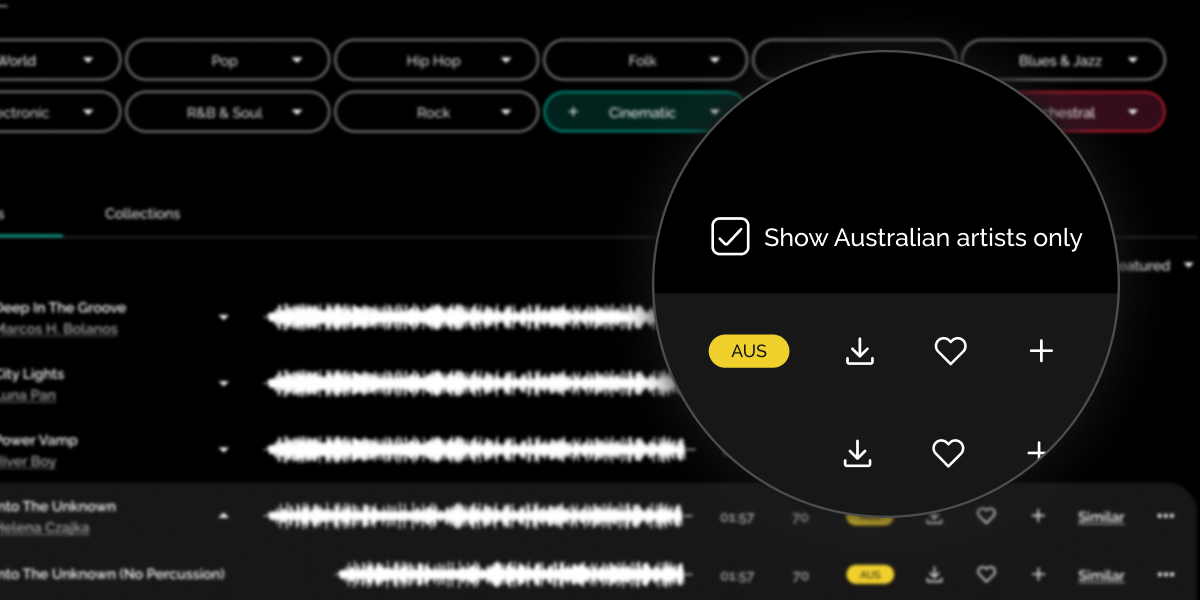
For Australian broadcasters, brands, agencies, and government bodies, supporting the local creative economy is often a conscious mandate. Melodie’s stance is simple: it should be frictionless for Australian clients to support local talent, if they want to do so.
A typical search might look like this:
- A client starts with a reference track that has a cinematic, atmospheric build.
- They use Similarity Search to generate a shortlist of tracks with the same emotional profile.
- Instead of scanning all international options, they apply the “Show Australian Artists only” filter (currently available for Australian-based users only).
- They further refine by mood, instrumentation, tempo, or key.
- Within seconds, they are listening to a track that fits both the creative brief and their mandate to support local artists.
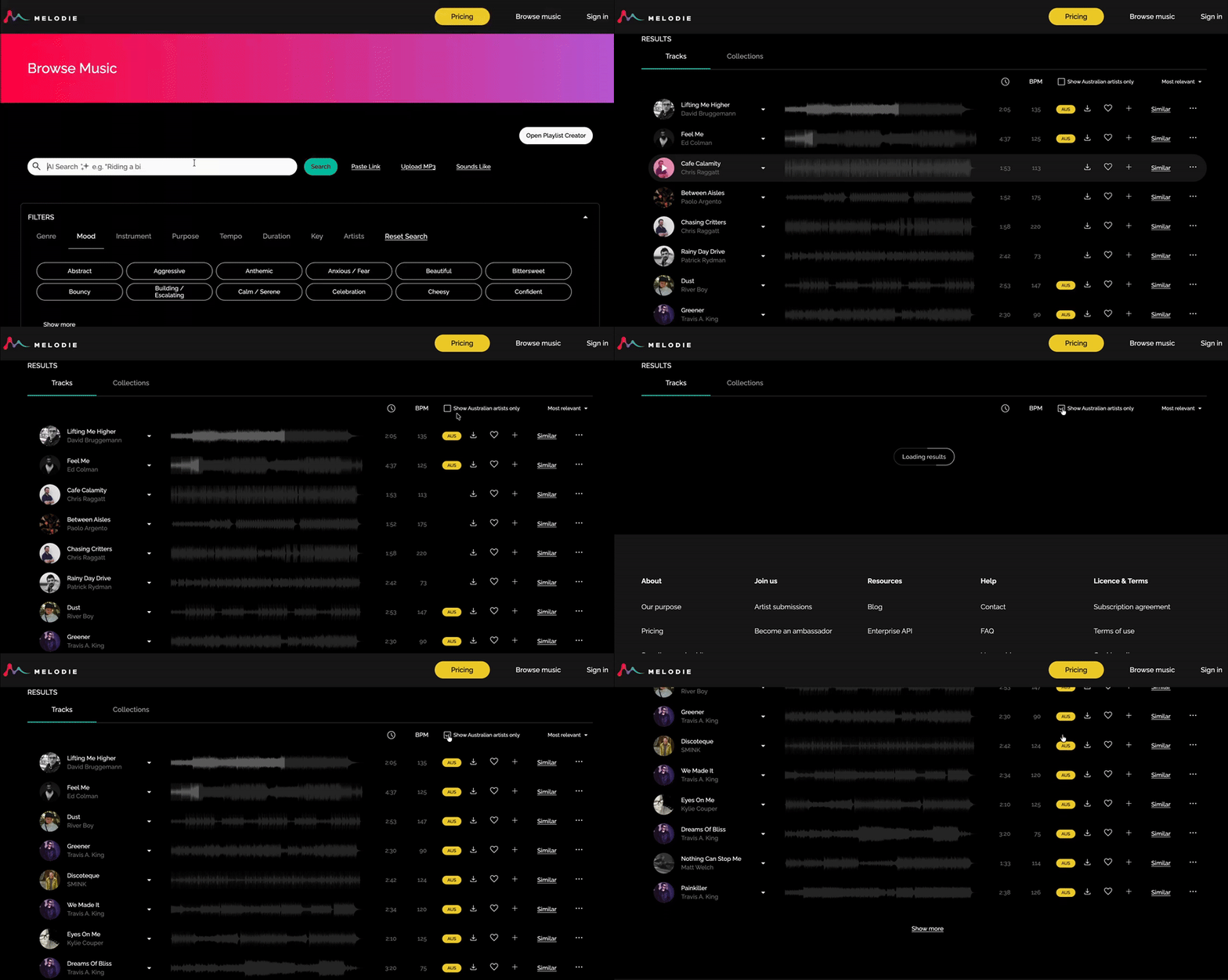
By making artist origin visible and searchable, Melodie ensures Australian music is infinitely discoverable—not buried beneath descriptors.
This approach extends to Melodie’s broader ethical framework, including the First Nations Composer Fund—part of their Indigenous Engagement Strategy. Melodie contributes a minimum of $25,000 annually to support Aboriginal and Torres Strait Islander artists in development and accessing music licensing opportunities.
Evan describes how Melodie approaches contextual and cultural metadata with care: “We only introduce tags when they serve a clear purpose for the user and the artist. Crucially, tags are optional pathways, not restrictive labels. They exist to empower choice—like finding tracks created by an Australian artist—not to define an artist by a single attribute. By working closely with our stakeholders, we ensure that our metadata adds value and visibility without diminishing the complexity of the artistry.”
From discovery to deployment: a National Geographic campaign
This workflow has already been translated into real campaigns.
Melodie collaborated with National Geographic on their film Meanwhile in Australia. The brief called for a sound that felt unmistakably Australian, authentic to the country’s northern “Top End” region.
Using Melodie’s combined AI and editorial search, the team discovered “Moonlit Campfires” by Australian composer James Collins, which ended up making it into the film’s trailer. The track matched the film’s emotional tone, instrumentation, and cultural context while ensuring that licensing revenue flowed directly back into the local creative community. A clear example of how sound-based discovery and contextual filters work together and why that combination matters.
The impact of integrating AI search
Since integrating AI search with Cyanite, Melodie has seen consistent, meaningful changes in how users search and make decisions:
- Search sessions are shorter.
- Playlists and shortlists are stronger.
- Users reach confident decisions faster.
- Usage of contextual filters continues to grow.
Evan explains that the addition of Cyanite’s AI search has given Melodie users greater flexibility in how they search, and confidence that “they’re not just finding a track—they’re finding the right track.” For Melodie, that’s the real value: striking the balance between speed and confidence.
Melodie’s own team also runs countless searches for clients daily. AI-powered discovery saves them significant time while helping them maintain the high editorial standards users expect from them.
The platform’s search experience has earned multiple industry awards, including 2024 Product of the Year at NAB Show in Las Vegas, celebrating technical excellence and reinforcing user trust.
When Melodie decided to amplify their music library with AI, their goal wasn’t to automate creativity. It was to remove friction. With their users top of mind, their intention was to help people find extraordinary, human-made music in seconds, while ensuring that every download pays a real artist.
Striking this balance with Cyanite’s technology has allowed Melodie to evolve without diluting what makes their catalog special.
Experience AI search at Melodie: BROWSE MUSIC
First published by Jakob | Jan 20, 2026.
